
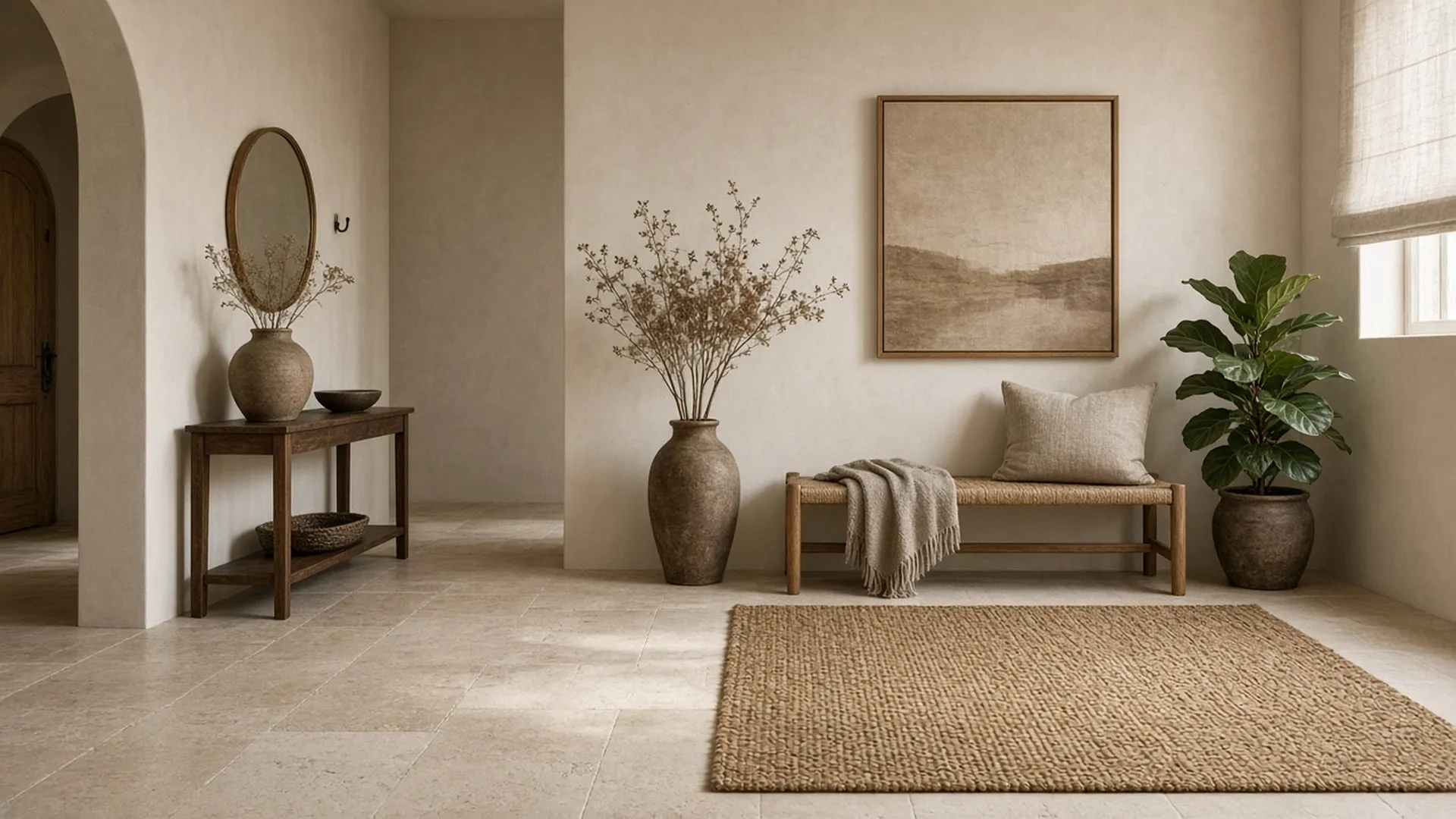
How to clean a jute rug or a sisal rug
What sources say about vacuuming, spills, and moisture, and why the maker's instructions come first.
Disclosure: We may earn a commission if you buy through links on this page. It does not change our guidance. Affiliate Disclosure
To clean a jute or sisal rug, follow the maker's care instructions first. We found no neutral source with cleaning steps written for jute or sisal, so this guide reports what conservation, museum, and EPA sources say about rugs, spills, and moisture in general. Put plainly: vacuum gently, blot spills, and dry the rug fully.
What are jute and sisal?
Both are plant fibers. The Food and Agriculture Organization of the United Nations (FAO) says: "Jute, abaca, coir, kenaf and sisal (JACKS) are natural fibres that have multiple end uses." The USDA National Agricultural Library lists jute and sisal as plant fibers. CCI says of rugs: "The foundation is usually cotton or linen. Hemp and jute may also be used."
Why start with the maker's instructions?
The maker knows its own fibers, dyes, and backing. The FTC's Care Labeling Rule covers textile wearing apparel and certain piece goods, and rugs fall outside its definitions, so a rug's care instructions are the maker's own.
Read the fiber content label too. The FTC says: "Both natural and man-made fibers must be identified by their generic names." It says fibers are listed by percentage of weight, so a rug sold as jute may list other fibers as well.
How should you vacuum a jute rug?
CCI's vacuuming guidance is written for carpets and rugs in general, not for jute alone. It says to use a standard head rather than a power head, with low suction and slow passes. It also says to vacuum the back of the rug, the underlay, and the floor from time to time. The George Washington University Museum and The Textile Museum says to vacuum both the back and the front of a rug that stays on the floor in daily use.
Why keep a plant fiber rug dry?
Moisture runs through every source we found. CCI says high humidity harms fibres and can make colours bleed. EPA says no mold grows without water or moisture, and that porous materials such as carpet may need to be discarded if mold grows on them.
EPA also says: "It is important to dry water-damaged areas and items within 24-48 hours to prevent mold growth." We have no drying source written for jute, so we pass on EPA's general timing.
What should you do about a spill?
Act quickly. CCI says to soak up as much liquid as you can with an absorbent material and to dab gently rather than rub. It says to cover the spot with clean absorbent material and weight it down until dry. Our stain removal guide has the rest of what sources say.
Is jute cleaned differently from sisal?
We have no neutral source that compares jute and sisal for cleaning, wear, or feel, so we do not compare them. FAO and the USDA list them as separate fibers. Read each maker's care instructions.
Where should a jute rug go?
We set no rule, and we have no source that says how jute or sisal handles damp. Given what EPA says about moisture and mold above, any rug in a spot that stays damp, such as beside a shower or a sink, needs to dry fully. CCI says light can dry out fibres and fade colours, so keep the rug out of direct sun where you can. Our bathroom and kitchen guides cover those rooms.
When should you call a professional?
CCI says to consult a professional about cleaning important rugs. EPA says that if you are unsure how to clean an item, or it is expensive or has sentimental value, EPA suggests asking a specialist, and it names carpet and rug cleaning among those specialties.
Sources: FAO, Jute and hard fibres; USDA National Agricultural Library Thesaurus, plant fibers; Canadian Conservation Institute, Basic care: Carpets and rugs; FTC, Threading Your Way Through the Labeling Requirements Under the Textile and Wool Acts; eCFR, 16 CFR Part 423, Care Labeling of Textile Wearing Apparel and Certain Piece Goods; EPA, A Brief Guide to Mold, Moisture and Your Home; The George Washington University Museum and The Textile Museum, Caring for Textiles.
FAQ
General information only. Keep walking paths clear. The CDC's home fall prevention checklist for older adults says to remove throw rugs, or use double-sided tape or a non-slip backing so the rugs won't slip. Follow the maker's label and instructions for any rug, rug pad, tape, or cleaning product. If someone falls and is hurt, get medical help. In an emergency, call 911.
Next: natural fiber rugs
Jute, sisal, and the label.
