
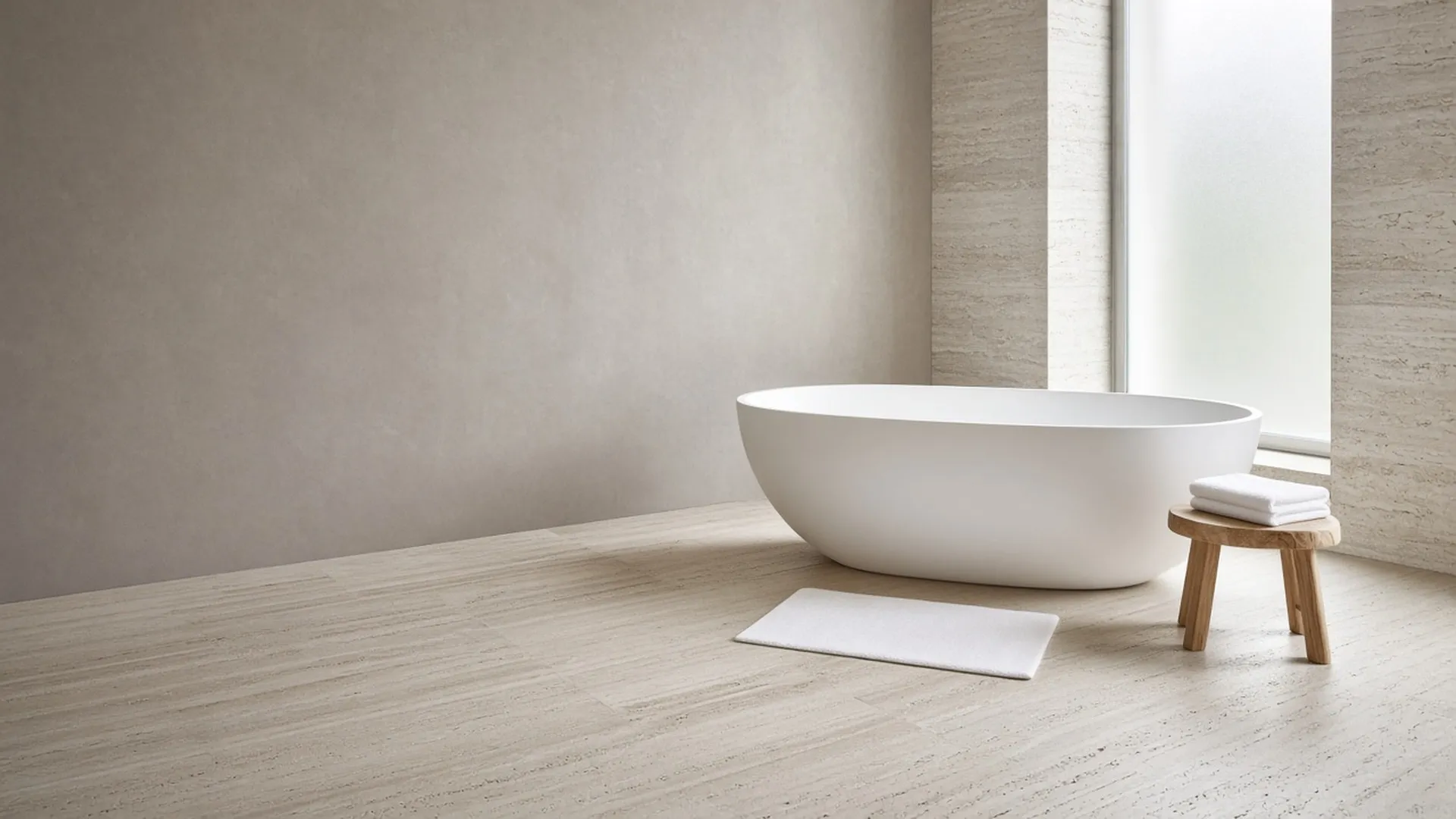
Bathroom rugs and bath mats: moisture, backing, washing
What fall prevention sources say about wet floors, why moisture matters, and where washing instructions come from.
Disclosure: We may earn a commission if you buy through links on this page. It does not change our guidance. Affiliate Disclosure
A bathroom rug or bath mat gets wet, so grip and moisture matter more here. NIA says to put nonskid mats, strips, or carpet on surfaces that may get wet, and EPA says wet items should dry within 24 to 48 hours to prevent mold. Washing instructions come from the maker.
What do fall sources say about bathrooms?
NIA's room-by-room guide says: "Place nonskid mats, strips, or carpet on all surfaces that may get wet." It also says to mount grab bars near toilets and inside and outside the tub and shower.
The CDC checklist for older adults covers the tub itself: "Put a non-slip rubber mat or self-stick strips on the floor of the tub or shower." A mat inside the tub and a rug on the floor outside it are different items. Follow each maker's instructions.
How does this fit with throw rug advice?
NIA also says: "Don't use throw rugs or small area rugs." The CDC says to remove throw rugs or keep them from slipping with double-sided tape or non-slip backing. NIA's nonskid mat advice and its throw rug advice sit side by side in the same guide, and we do not try to settle them. NIA's guide also says: "Check that all carpets are fixed firmly to the floor, so they won't slip."
Why does moisture matter in a bathroom?
EPA says no type of mold will grow without water or moisture. It says: "It is important to dry water-damaged areas and items within 24-48 hours to prevent mold growth." EPA also says to use the bathroom fan, or open a window, while you shower. It says to keep indoor humidity below 60 percent if possible, ideally between 30 and 50 percent.
CCI says high humidity harms fibres and can make colours bleed. CCI wrote that about carpets and rugs in general.
What should you know about backing?
The CDC names a non-slip backing as one way to keep throw rugs from slipping. We have no neutral source that compares backing materials or says how long a backing lasts, so we do not.
The label may not tell you either. The FTC lists the backings of carpets or rugs, and the pads or cushions used under them, among items its Textile Act labeling does not cover. Ask the maker what the backing is and how to care for it, and ask the floor maker how a backing affects the floor.
How do you wash a bath mat?
Follow the maker's instructions. The FTC's Care Labeling Rule covers textile wearing apparel and certain piece goods. Part 423 does not mention rugs or bath mats, so they fall outside its definitions, and a mat's care instructions, if any, are the maker's own. We give no washing settings.
The FTC does list floor coverings, including rugs, carpets, and mats, among the products its Textile Act rules cover, so look for the fiber content on the label. After washing, dry the mat fully. EPA's drying advice is written for water-damaged areas and items, and we pass it on as context for a mat that stays damp.
What if a bath rug gets moldy?
EPA says: "Absorbent or porous materials, such as ceiling tiles and carpet, may have to be thrown away if they become moldy." It says mold can fill the gaps in porous materials, so it may not be possible to remove all of it.
EPA also says: "If you have health concerns, consult a health professional before starting cleanup." For an item that is expensive or has sentimental value, EPA says you may wish to consult a specialist.
Where should a bathroom rug sit?
Keep it out of the swing of the door, and clear of the path to the toilet and tub. The CDC asks if the way from your bed to the bathroom is dark, and it says: "Put in a nightlight so you can see where you're walking." NIA suggests keeping a bathroom light on at night, or a night light that turns on by itself in the dark. Measure the floor and the door swing before you choose a size.
Sources: National Institute on Aging, Preventing Falls at Home: Room by Room; CDC STEADI, Check for Safety: A Home Fall Prevention Checklist for Older Adults (PDF); EPA, A Brief Guide to Mold, Moisture and Your Home; Canadian Conservation Institute, Basic care: Carpets and rugs; FTC, Threading Your Way Through the Labeling Requirements Under the Textile and Wool Acts; eCFR, 16 CFR Part 423, Care Labeling of Textile Wearing Apparel and Certain Piece Goods.
FAQ
General information only. Keep walking paths clear. The CDC's home fall prevention checklist for older adults says to remove throw rugs, or use double-sided tape or a non-slip backing so the rugs won't slip. Follow the maker's label and instructions for any rug, rug pad, tape, or cleaning product. If someone falls and is hurt, get medical help. In an emergency, call 911.
Next: bedroom rugs
Size around the bed.
