
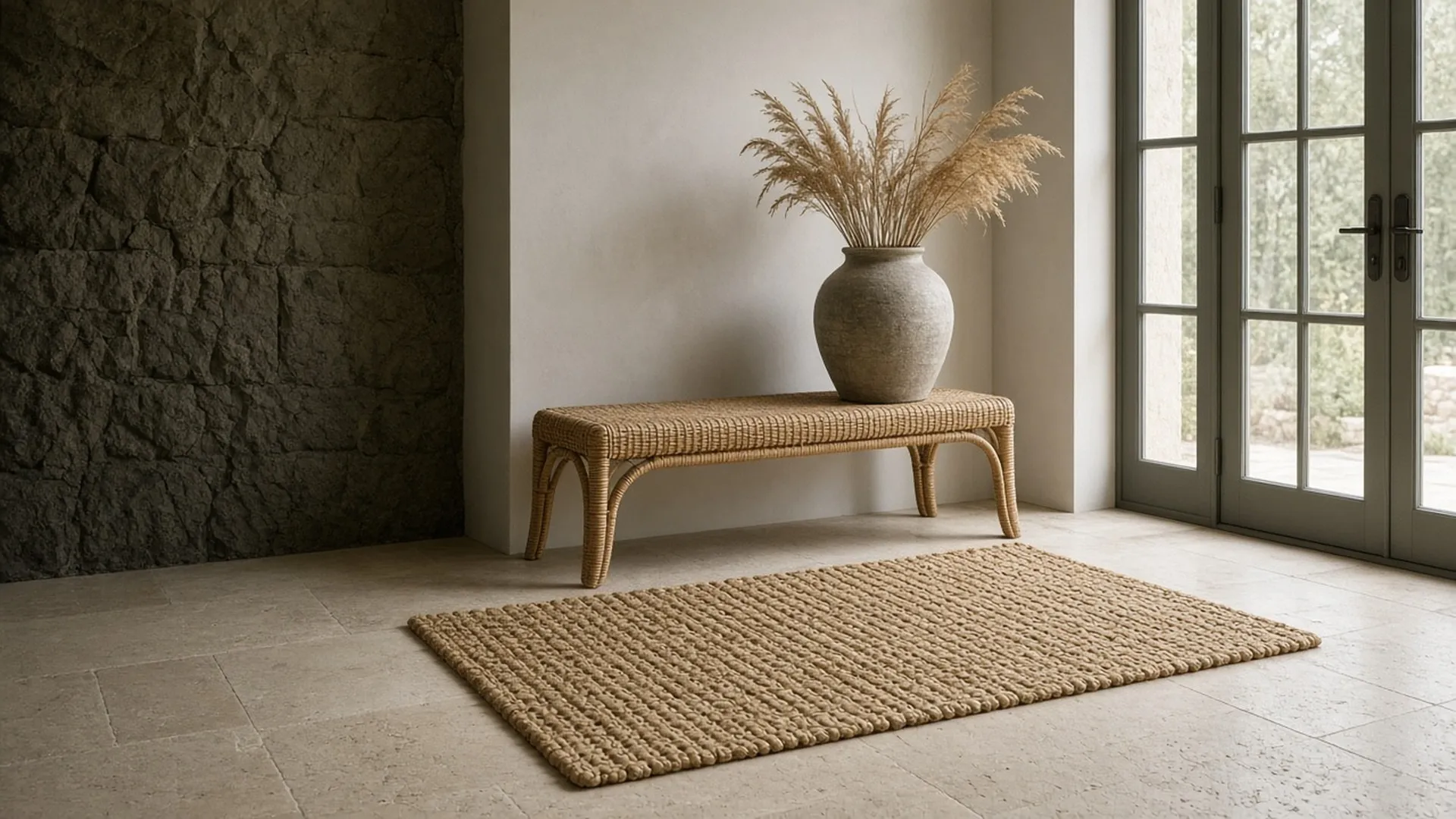
Natural fiber rugs, explained
Jute, sisal, and what the label says.
Disclosure: We may earn a commission if you buy through links on this page. It does not change our guidance. Affiliate Disclosure
Plant fibers
The Food and Agriculture Organization of the United Nations (FAO) groups jute and sisal with abaca, coir, and kenaf as natural fibres, and lists carpets among their uses. The USDA National Agricultural Library lists jute and sisal as plant fibers. Rugs made from these fibers are sold as natural fiber rugs; read the fiber content label to see what each one is made of.
On the label
The FTC says both natural and man-made fibers must be identified by their generic names, listed by percentage of weight in order of predominance. A natural fiber rug label lists its fibers the same way.
Jute in rug foundations
CCI says the foundation of a rug is usually cotton or linen, and that hemp and jute may also be used.
Light and humidity
CCI says light can dry out the fibres and cause colours to fade, and that high humidity also damages fibres and may cause colours to bleed. CCI says this about carpets and rugs in general, not only plant fibers.
Jute vs sisal
We have no neutral source that compares jute and sisal for feel, wear, or cleaning, so we do not compare them. Read each maker's care instructions.
Sources: FTC, Threading Your Way Through the Labeling Requirements Under the Textile and Wool Acts; Canadian Conservation Institute, Basic care: Carpets and rugs; FAO, Jute and hard fibres; USDA National Agricultural Library Thesaurus, plant fibers.
FAQ
General information only. Keep walking paths clear. The CDC's home fall prevention checklist for older adults says to remove throw rugs, or use double-sided tape or a non-slip backing so the rugs won't slip. Follow the maker's label and instructions for any rug, rug pad, tape, or cleaning product. If someone falls and is hurt, get medical help. In an emergency, call 911.
Next: wool rugs
Label, light, and moths.
