
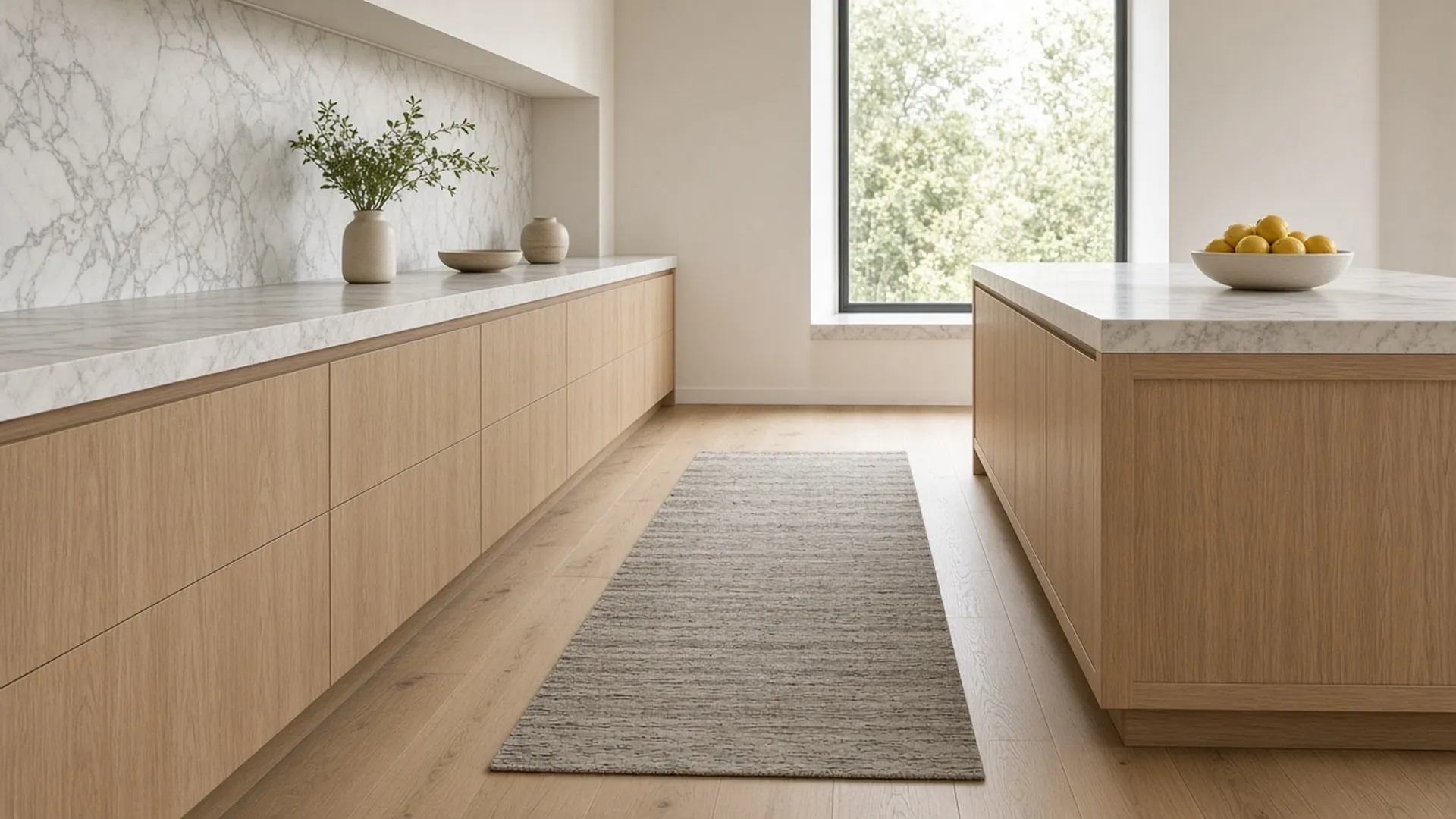
Kitchen rugs: slips, washing, and clear paths
What the CDC and NIA say about rugs underfoot, how washable claims work, and how to keep work paths clear.
Disclosure: We may earn a commission if you buy through links on this page. It does not change our guidance. Affiliate Disclosure
A kitchen rug sits where spills happen and where people walk while carrying things. The fall prevention sources we use, written for older adults, say to remove throw rugs or keep them from slipping. A washable claim comes from the rug's maker, so its instructions are the ones to follow.
What do fall sources say about rugs?
The CDC's home fall prevention checklist for older adults asks: "Do you have throw rugs on the floor?" Its answer: "Remove the rugs, or use double-sided tape or a non-slip backing so the rugs won't slip."
The National Institute on Aging (NIA) goes further in its room-by-room guide to preventing falls at home. It says: "Don't use throw rugs or small area rugs." Both sources write for older adults. Our rug pads guide covers the CDC's figures on falls.
What does NIA say about kitchens?
In its kitchen list, NIA says: "Clean up spills immediately." It also says to keep the pots, pans, and utensils you use every day within reach. The CDC checklist says: "Keep things you use often on the lower shelves (about waist high)." It also says: "Never use a chair as a step stool."
NIA also says: "Don't walk on slippery, newly washed floors." That applies to the floor around a kitchen rug as much as to the rug.
How do you keep a kitchen rug from slipping?
The CDC names two ways: double-sided tape, or non-slip backing. It does not name or rate products, and neither do we. Follow the maker's instructions for the tape, the backing, or any pad, and for the floor under it.
We have no neutral source on how backings or pads affect floor finishes. Ask the floor maker or installer.
Can a kitchen rug go in the washer?
Only if its maker says so. A rug is sold as washable on its maker's word, and the maker's instructions say how to wash and dry it. We give no washing settings.
The FTC's Care Labeling Rule covers textile wearing apparel and certain piece goods, and rugs fall outside its definitions, so a rug may carry no care label at all. Keep the maker's instructions with the receipt.
What should you do about a spill?
Treat it like any rug spill. CCI says to soak up as much liquid as you can right away with an absorbent material, then dab gently rather than rub. Our stain removal guide has the rest of what sources say.
Then dry the rug fully. EPA says: "If wet or damp materials or areas are dried 24-48 hours after a leak or spill happens, in most cases mold will not grow."
How do you measure a kitchen path?
We give no size chart and no clearance numbers, because we have no neutral source for them. Measure instead:
- the length and width of the floor you want to cover;
- the space you stand in at the sink, stove, and counters;
- any door, drawer, or appliance door that has to open over the rug.
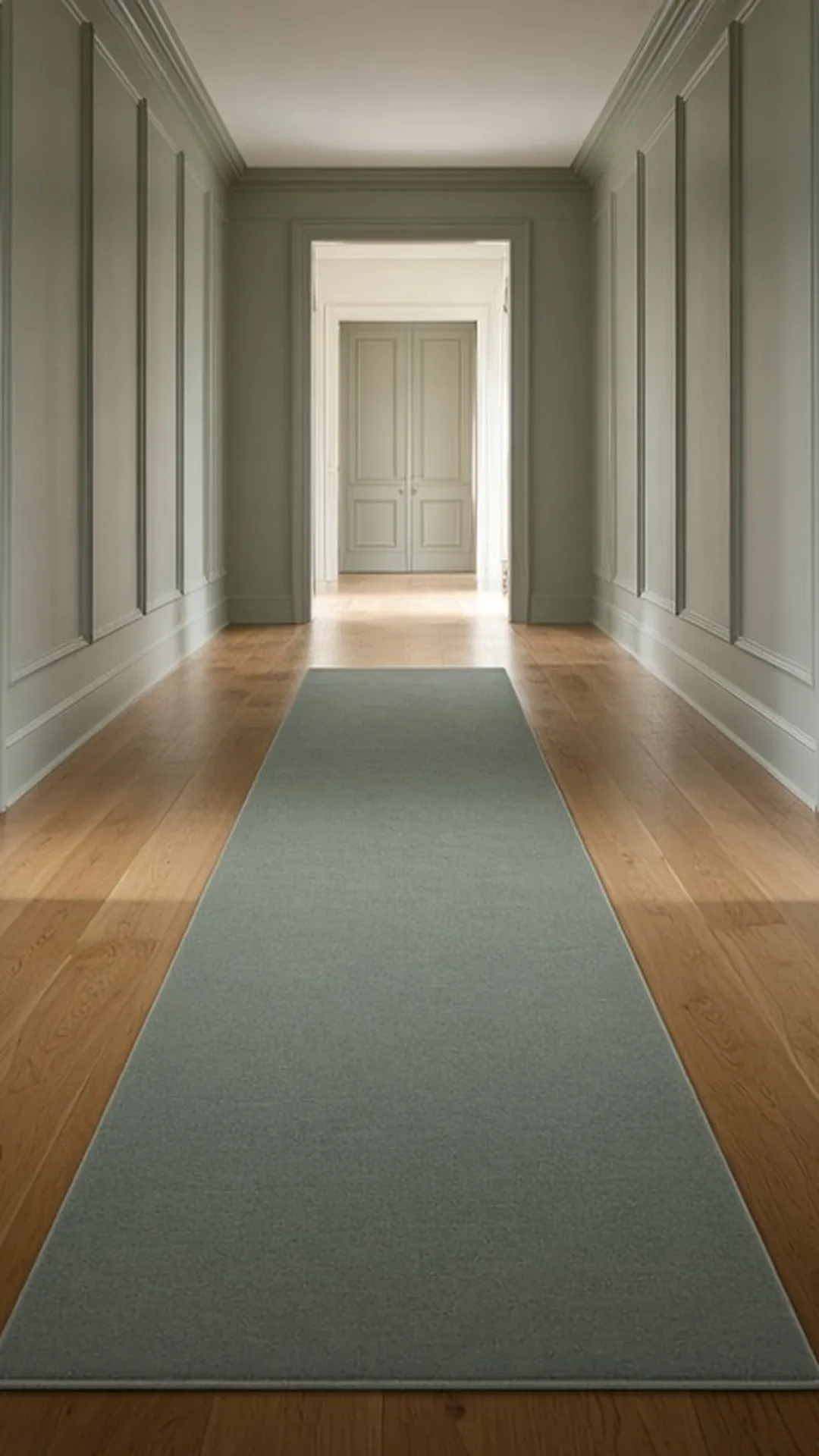
The CDC checklist says that if you have to walk around furniture, "Ask someone to move the furniture so your path is clear." NIA says: "Keep electrical cords near walls and away from walking paths."
Do grease and heat matter?
We found no source on kitchen rugs and grease. One museum source touches on it. The Arizona State Museum, writing about valuable Navajo textiles, says it is better to keep them away from the kitchen, the fireplace, or heating registers "so that grease and soot deposits can be avoided." That advice is for valuable textiles. We pass it on as context, not a rule.
What we do not do
We do not pick, rank, or price kitchen rugs, and we do not say which backing or size to buy. We explain what the sources say, so you can read a maker's label and instructions with those points in mind.
Sources: CDC STEADI, Check for Safety: A Home Fall Prevention Checklist for Older Adults (PDF); National Institute on Aging, Preventing Falls at Home: Room by Room; Canadian Conservation Institute, Basic care: Carpets and rugs; EPA, A Brief Guide to Mold, Moisture and Your Home; eCFR, 16 CFR Part 423, Care Labeling of Textile Wearing Apparel and Certain Piece Goods; Arizona State Museum, University of Arizona, Some Comments on the Care of Navajo Textiles (PDF).
FAQ
General information only. Keep walking paths clear. The CDC's home fall prevention checklist for older adults says to remove throw rugs, or use double-sided tape or a non-slip backing so the rugs won't slip. Follow the maker's label and instructions for any rug, rug pad, tape, or cleaning product. If someone falls and is hurt, get medical help. In an emergency, call 911.
Next: bathroom rugs
Moisture, backing, and washing.
