
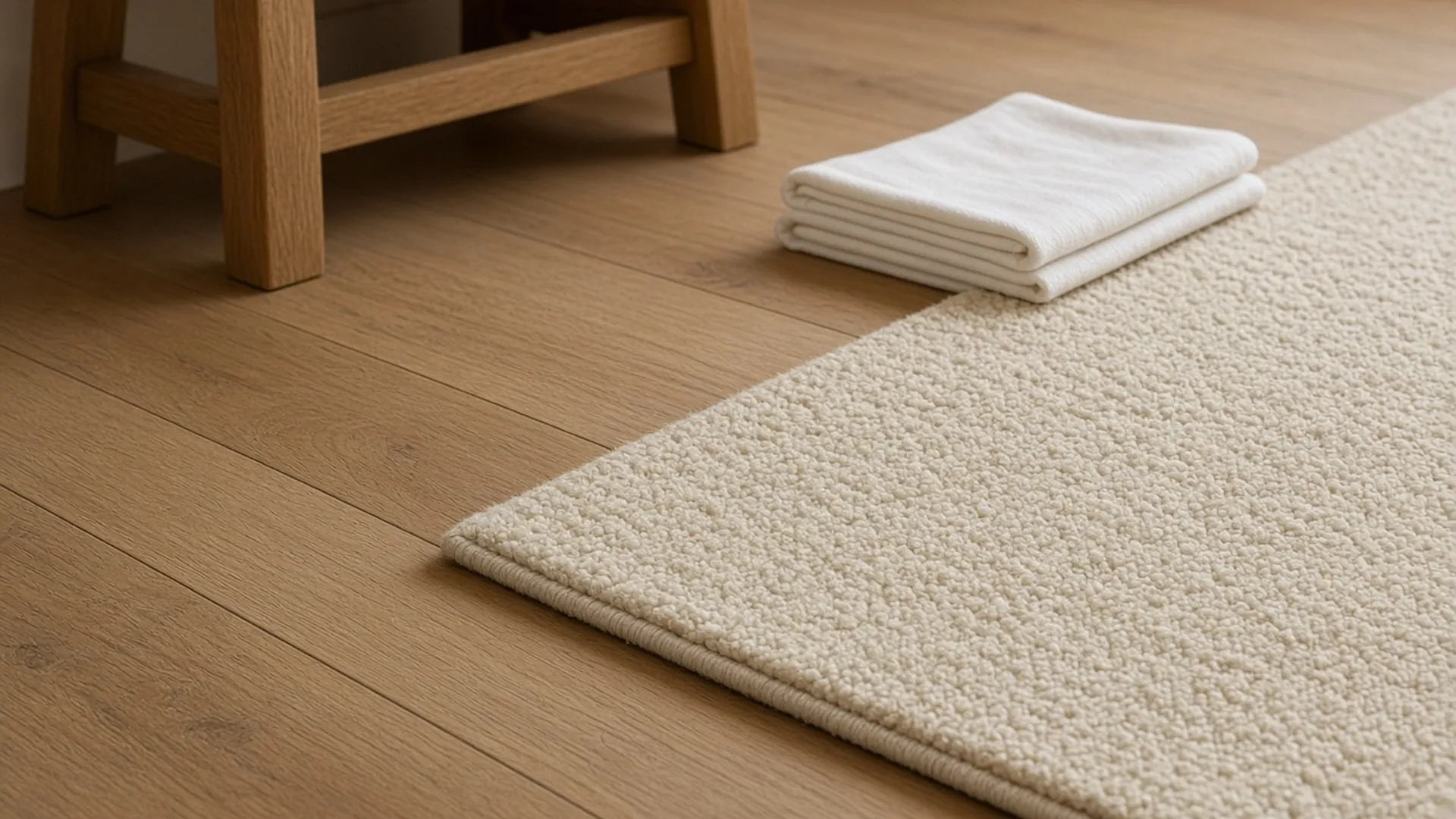
How to clean a wool rug
Check the label, vacuum the way CCI describes, blot spills, and leave deep cleaning to the maker's instructions or a professional.
Disclosure: We may earn a commission if you buy through links on this page. It does not change our guidance. Affiliate Disclosure
To clean a wool rug, first confirm on the label that it is wool. Then vacuum it regularly with low suction and no power head, and blot spills right away. For deep cleaning, follow the maker's instructions or ask a professional, as CCI advises for important rugs.
Is it wool? Check the label
The FTC says wool can mean fiber from the fleece of sheep or lamb, or "the hair of the Angora goat, Cashmere goat, camel, alpaca, llama, or vicuna." It lists carpets, rugs, and mats among the products covered by the Textile Act rather than the Wool Act. It says fibers are listed by percentage of weight, so a label can show more than one fiber. Read the percentages before you clean.
How should you vacuum a wool rug?
CCI's guidance for carpets and rugs comes down to a few points:
- Use a standard vacuum head with low suction. Do not use a power head.
- Move the head slowly. CCI says pressure or rubbing only damages the fibres.
- "Always vacuum in the direction of the pile."
- Watch for loose threads and the fringe.
- Vacuum the back of the rug, the underlay, and the floor from time to time.
The George Washington University Museum and The Textile Museum says: "If you have a rug in constant use on the floor, make sure to vacuum the back as well as the front on a regular basis."
Why does vacuuming matter for wool?
CCI says dirt and dust work into a rug and grind away at its base like sandpaper. It names some moths and carpet beetles as pests that eat wool, and says regular vacuuming will help discourage them. The Arizona State Museum says regular vacuuming of both sides of a Navajo textile removes loose dirt and dust, and lowers the chance of insect infestation. Our carpet beetles guide covers the signs to look for.
What should you do about a spill?
Act right away. CCI says to soak up as much liquid as you can using something absorbent, like a clean cotton cloth. Then: "Dab gently and avoid the temptation to rub because that will only push the stain into the rug more." It says to cover the spot with clean absorbent material and weight it down until dry. Our stain removal guide has the rest of what sources say.
Can you wash a wool rug at home?
Only if the maker's instructions say so, and only as they say. We give no washing settings.
Two sources explain why caution makes sense. CCI says: "Heat causes wool to lose its natural oils, which weakens the threads." It says high humidity may cause colours to bleed. The Arizona State Museum, writing about Navajo textiles, says: "Washing is not recommended." Its reasons include dyes that are water soluble, detergents that are somewhat alkaline, and wet wool that is "extremely heavy and susceptible to uneven stretching and straining." That advice is for Navajo textiles, not every wool rug, but it shows what can go wrong.
Should you use a carpet shampoo?
Not on an important rug, according to CCI. It says: "Do not use commercial carpet shampoos on important rugs because dust and dirt are more likely to be attracted to the fibres after cleaning. Consult a professional about cleaning."
When should a professional clean it?
CCI says to consult a professional about cleaning important rugs. For a historical textile, The George Washington University Museum and The Textile Museum says to ask a textile conservator first. It says: "In fact, sometimes cleaning can be more harmful than allowing the textile to remain soiled."
For Navajo textiles, the Arizona State Museum says some may be dry-cleaned, but only after a dry-cleaner experienced with them checks every dye color. It says dry cleaning removes some natural oils from the wool along with the stains.
How should you dry and store it?
Dry the rug fully. EPA says wet areas and items should be dried within 24 to 48 hours to prevent mold growth. Before storage, CCI says a rug should be clean and dry before it is rolled. It says to avoid folding, because creases may leave permanent marks or break threads, and to keep rugs out of attics and basements, where heat and humidity swing.
Sources: FTC, Threading Your Way Through the Labeling Requirements Under the Textile and Wool Acts; Canadian Conservation Institute, Basic care: Carpets and rugs; The George Washington University Museum and The Textile Museum, Caring for Textiles; Arizona State Museum, University of Arizona, Some Comments on the Care of Navajo Textiles (PDF); EPA, A Brief Guide to Mold, Moisture and Your Home.
FAQ
General information only. Keep walking paths clear. The CDC's home fall prevention checklist for older adults says to remove throw rugs, or use double-sided tape or a non-slip backing so the rugs won't slip. Follow the maker's label and instructions for any rug, rug pad, tape, or cleaning product. If someone falls and is hurt, get medical help. In an emergency, call 911.
Next: jute and sisal rugs
Keep plant fibers dry.
